
Criminal Court Records in Rankin County
A criminal court record opens when charges are filed against a person. The court clerk creates the file and adds every paper as the case moves. A felony file holds the indictment or charging document, arrest and search warrants, the initial appearance, the arraignment, pleas, motions, orders, trial entries, verdicts, and the sentencing order. It also tracks bond, probation terms, revocations, and appeals. The Circuit Clerk receives and files Circuit and County Court criminal papers in Rankin County. The clerk issues process and keeps the judgments. This case file is the official source, not the jail booking sheet.
Rankin County splits criminal work across several court levels. Felony trials are held in Circuit Court, the 20th Circuit District trial court. Justice Court judges issue felony arrest and search warrants on probable cause and hold the initial appearances. Felony preliminary hearings are usually conducted in County Court. County Court also hears non-capital felony cases that Circuit Court transfers to it. Justice Court handles misdemeanor criminal charges and traffic citations. Each level adds its own entries to the record, so a single case can leave a trail at more than one court.
The arrest side and the charges side are separate from this case file. For the booking record and jail custody, the county jail roster is the faster source. For a closer look at the charges as filed and how their status changes, the Rankin County arrest records and court charges page covers that path.
How to Search Rankin County Criminal Records
Rankin County does not run one universal case-search box for every court. Searchers route by court level. For Circuit and County Court criminal files, start with the Circuit Clerk. The statewide electronic route is Mississippi Electronic Courts, where participating trial courts file. Rankin Circuit and County Court are listed in MEC, but availability should be confirmed with the Circuit Clerk. For a misdemeanor or traffic case, the Justice Court counter holds the file.
- Pick the court that handled the case. Felony files sit with the Circuit Clerk, misdemeanor files with Justice Court.
- Search by the defendant name or the case number through MEC or by contacting the clerk who keeps the file.
- Narrow the result by court, case type, and filing date to find the right case.
- Open the case to read the docket entries, the plea, and the disposition.
- Request a certified copy from the clerk when a record is needed for a legal or official use.
Statewide tools fill the gaps. The Mississippi Department of Corrections inmate search lists sentenced offenders by name or MDOC ID and reflects prison commitments after a felony conviction. The county jail roster shows current custody and booking charges before disposition. Neither replaces the court case file, but both point a searcher to the court that holds it.
Stages of a Rankin County Criminal Case
A Rankin County criminal case moves through set stages. Each stage adds new papers to the file. The record grows from the first charge to the final order. Reading a case file means following that order. The flow below shows the path most felony cases take.
Case flow: Charges Filed › Arraignment › Pretrial / Motions › Plea or Trial › Disposition › Sentencing
A case begins when an agency files charges and a judge finds probable cause. In Rankin County, a Justice Court judge can issue the arrest warrant and hold the initial appearance. Felonies then go to the grand jury for an indictment and on to Circuit Court. Misdemeanors stay in Justice or County Court. Every Tuesday is an initial appearance date for misdemeanor and traffic defendants to plead guilty or not guilty.
| Stage | What Happens |
|---|---|
| Arraignment | The defendant is read the formal charge in open court and enters a plea of guilty, not guilty, or another authorized response. |
| Pretrial / Motions | Lawyers file motions, exchange evidence, set hearings, and argue bond or suppression issues before any trial. |
| Plea or Trial | The case ends in a plea or goes to trial. A unanimous vote of twelve jurors is required for a criminal conviction in Circuit Court. |
| Sentencing | After a guilty plea or verdict, the judge enters the sentence: jail or prison time, probation, fines, court costs, or restitution. |
Note: A single charge can pass through Justice Court, the grand jury, and Circuit Court, so its full record may span more than one clerk's file.
What a Rankin County Criminal Court Record Shows
A Rankin County criminal case file carries a fixed set of fields. The clerk records the parties, the charges, and every event by date. Reading these fields tells the whole story of a case. The State is the plaintiff in a criminal matter, and the accused is the defendant. The table below breaks down the core fields and what each one shows.
| Field | What It Shows |
|---|---|
| Case Number | The unique number assigned by the court, plus which court holds the file: Circuit, County, or Justice. |
| Defendant | The accused person, with the State of Mississippi listed as the prosecuting party. |
| Charges | Each count as filed, the statute cited, and the severity prefix marking a felony or a misdemeanor. |
| Plea | The defendant response: guilty, not guilty, nolo contendere, or another authorized plea. |
| Docket Entries | Dated events such as motions filed, orders entered, hearings set, continuances, and the trial. |
| Disposition | The outcome of each count: dismissed, guilty plea, conviction, acquittal, or transferred. |
| Sentence | The punishment ordered: jail or prison term, probation, fines, court costs, and restitution. |
Other fields round out the file. Bond entries show cash, surety, or a no-bond status. Financial fields list fines, costs, and any payment plan. Hearing fields name the court date, the courtroom, and the judge. The file also marks redactions, since Social Security numbers, financial account numbers, and minor names are kept out of the public version.
Who Prosecutes Rankin County Criminal Cases
Two offices prosecute crime in Rankin County. Felonies are handled by the District Attorney for the Twentieth Judicial District. The county District Attorney page identifies John K. "Bubba" Bramlett, who has prosecuted thousands of cases across the district.
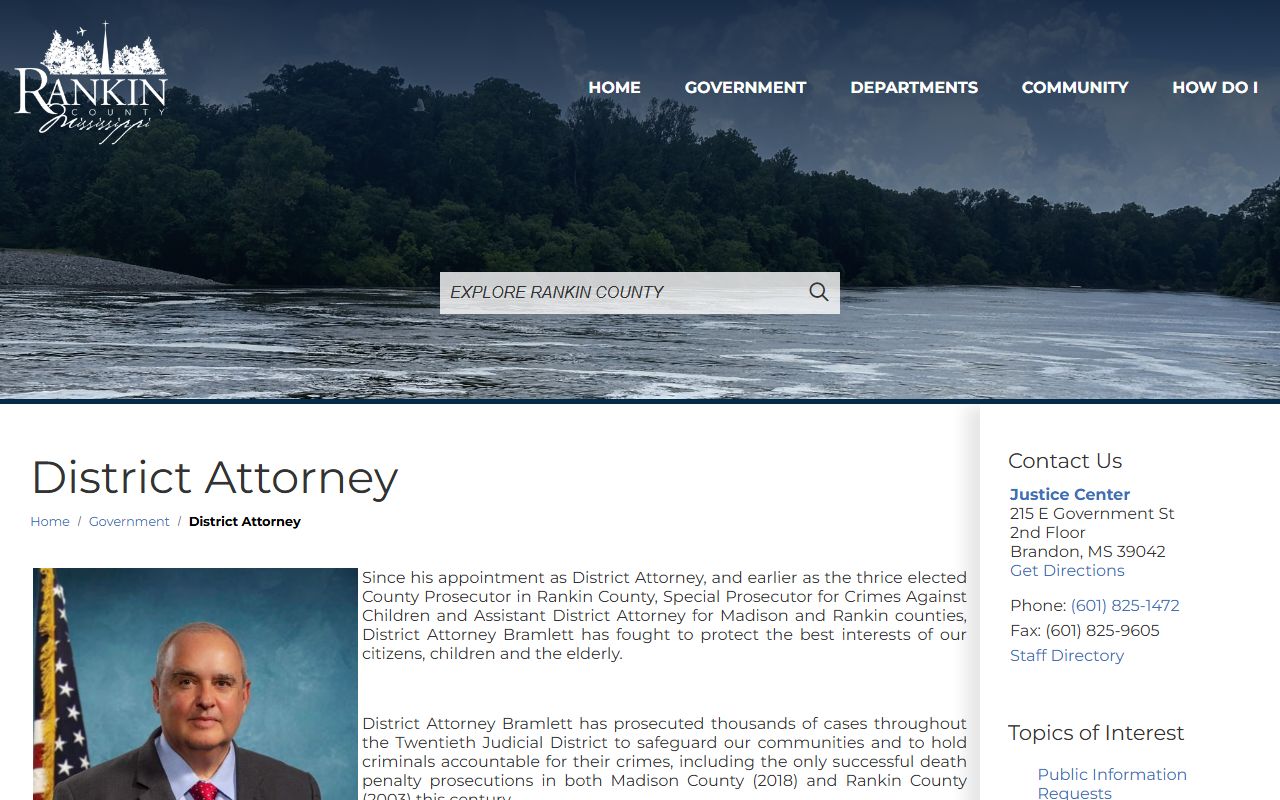
The DA name appears on felony indictments and trial records in Circuit Court. His office secured the only successful death penalty prosecution in Rankin County this century.
Misdemeanors take a different path. The County Prosecutor office handles all criminal matters not taken by the DA. County Attorney Trey Spillman and Assistant County Prosecutor Blake Alan Cauthen prosecute misdemeanor charges filed within county jurisdiction.
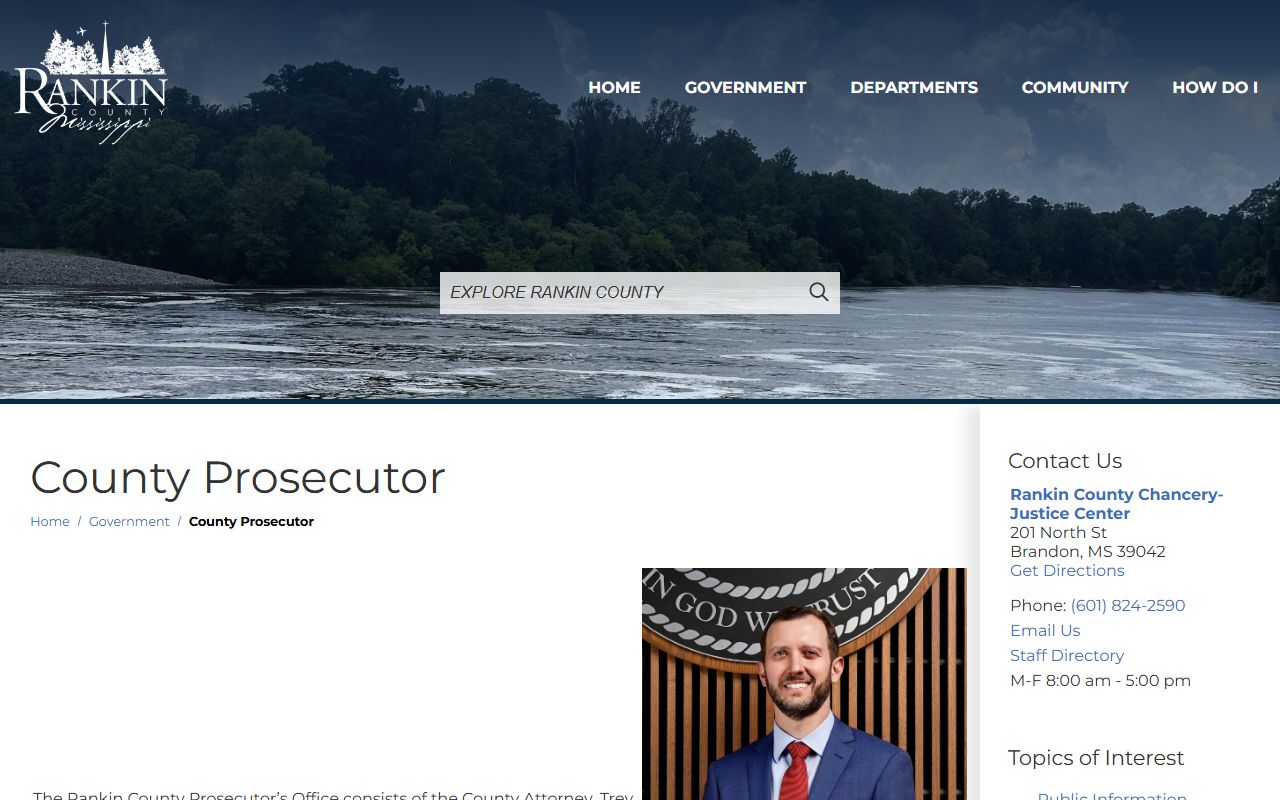
The office is at the Chancery-Justice Center, 201 North St, Brandon, and the phone is 601-824-2590. It prosecutes cases filed by the Sheriff's Department, Reservoir Police, the Highway Patrol, and other agencies.
Felony outcomes show up in official prosecution news. The DA posts press releases on jury convictions for major cases in the district.
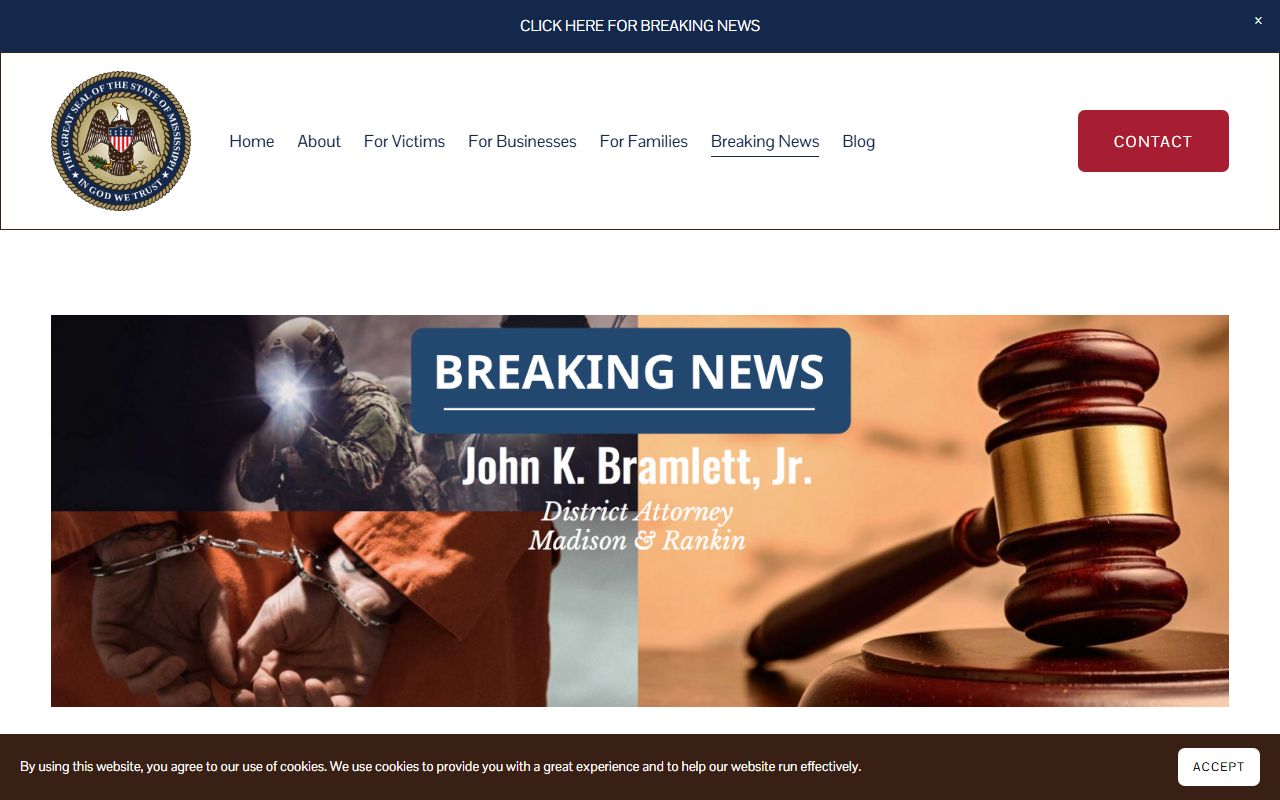
Those releases name the charge, the verdict, and the sentence, which mirror the fields in the court case file itself.
Charges vs. Convictions
Being charged is not the same as being convicted. A charge is an accusation. A conviction is a finding of guilt by plea or verdict. A criminal court record can show charges that were later dropped, dismissed, or that ended in an acquittal. The presence of a charge does not prove guilt. Reading the disposition field is the only way to know how a count ended.
| Charge | Conviction | |
|---|---|---|
| Stage | Accusation | Verdict or plea |
| Burden of Proof | Probable cause | Beyond reasonable doubt |
| Public Record | Yes | Yes |
Reading Dispositions and Sentences
The disposition is the outcome of a charge. Each count in a case has its own disposition. A guilty plea or a guilty verdict ends in a conviction. A not guilty verdict is an acquittal. A dismissed charge was dropped by the court or the prosecutor. A nolo contendere, or no contest, plea is treated as a conviction for sentencing. Some cases end in a transfer to another court or an appeal.
The sentence follows a conviction. It can mix several terms in one order. A felony sentence may impose time in the state penitentiary, while a misdemeanor caps at up to one year in county jail. The order may add probation, fines, court costs, and restitution. Some Rankin County defendants serve through the county Trusty Inmate Program rather than the state prison system. The sentencing order in the file states the exact terms.
Sealed vs. Expunged Records
Some records leave public view. A sealed record is hidden from ordinary public access but still exists. An expunged record is removed from public access and treated as though the charge never occurred. Mississippi expunction under Miss. Code Section 99-19-71 covers certain dismissed, dropped, no-disposition, and not-guilty matters, plus some first-offender and listed conviction categories. Eligibility depends on the charge and the disposition.
| Sealed | Expunged | |
|---|---|---|
| Visibility | Hidden from public | Removed and treated as never existed |
| Law Enforcement | Limited access | Very limited access |
| Eligibility | Set by court order in qualifying cases | Certain dismissed, not-guilty, or first-offender cases under Section 99-19-71 |
Getting an expunction takes steps. A person identifies the court that handled the charge, gets the case number and disposition from the clerk, confirms the charge qualifies, and files a petition in the court with jurisdiction. After a judge signs the order, agencies that hold criminal-history data must process it. Until then, the record may still appear in court, jail, and background systems.
Public Access to Rankin County Criminal Records
Most Rankin County criminal case files are open to the public in Mississippi. The Public Records Act treats government records as available for inspection unless a statute says otherwise. Access starts with the office that controls the file. Circuit and County criminal case files go to the Circuit Clerk. Justice Court holds its own misdemeanor and traffic files. The county public-information page tells requesters to contact the elected official who oversees the data. Criminal files sit within the wider set of Rankin County court records, which span civil, family, and probate matters too.
Key Statutes:
Mississippi Code § 25-61-1 - Public records are open for inspection unless a law exempts them, and electronic storage cannot erode that access.
Mississippi Code § 99-19-71 - Qualifying dismissed, not-guilty, and certain conviction records can be expunged by court order.
Federal Criminal Cases in Rankin County
Not every crime in Rankin County is a state case. Some are charged in federal court. The county sits in the U.S. District Court for the Southern District of Mississippi, Northern Division, with filings handled in Jackson. Federal cases are prosecuted by the U.S. Attorney for the Southern District of Mississippi, not the District Attorney.
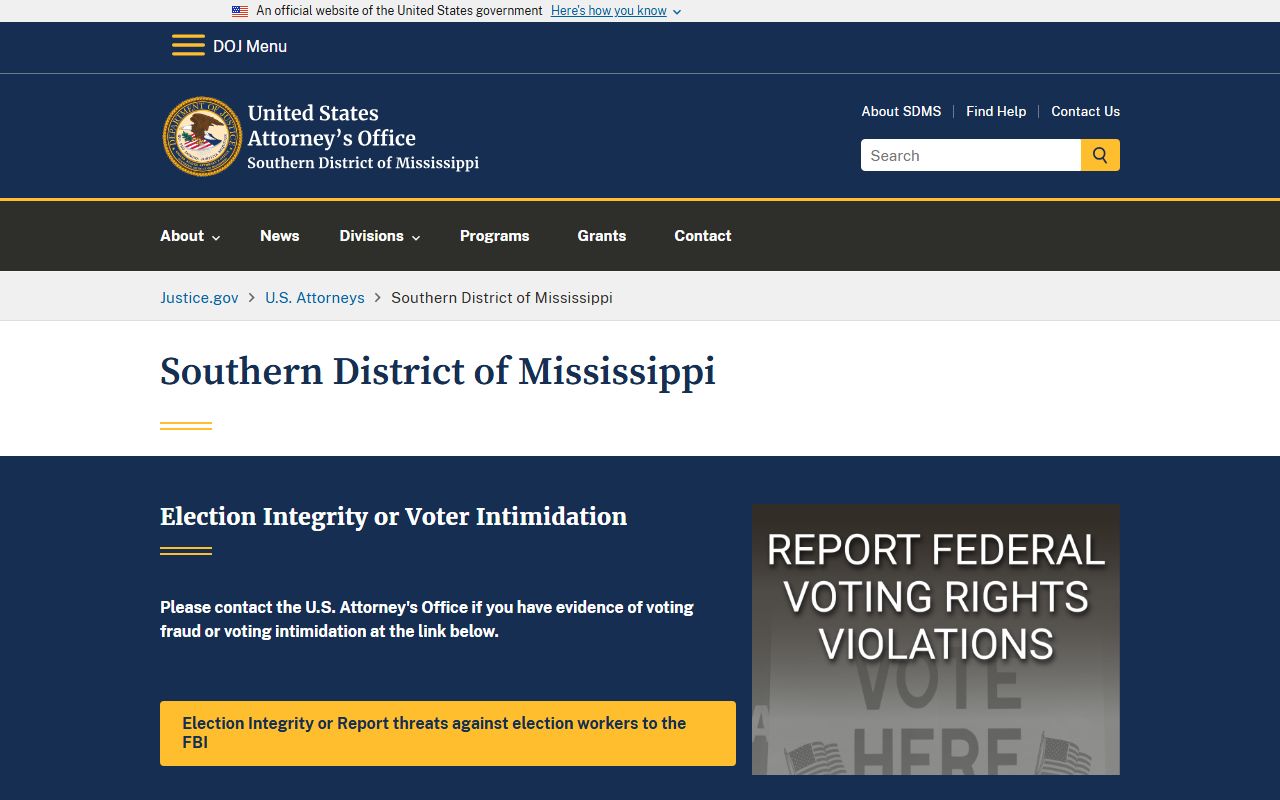
Federal case files are kept in the federal system, not the county clerk office, and access runs through PACER and CM/ECF rather than the Circuit Clerk.
Federal prosecutors announce major outcomes that touch the county. The office posts press releases on federal cases that name the charge, the plea or verdict, and the sentence.
These federal records sit apart from the county case file, so a full criminal history may need a search at both levels.
Background Check Considerations
A casual record lookup is not a legal background check. Reading a court file tells you what happened in one case. A formal background check for hiring, housing, or credit must follow federal rules under the Fair Credit Reporting Act. Those reports come from regulated agencies, not from a public docket search. Court files also lag behind real life, since a recent plea or expunction may not yet appear.
Important: This site is not a consumer reporting agency under the Fair Credit Reporting Act, and its records may not be used for employment, housing, credit, or other FCRA-regulated decisions.
Restricted Rankin County Criminal Records
Some Rankin County criminal records are not open to the public. Youth Court handles cases for persons under eighteen, and its files are confidential under Miss. Code Section 43-21-251. Juvenile cases and child-related law-enforcement records cannot be treated as searchable public records. Sealed and expunged cases also leave public view. Sensitive personal identifiers are redacted from open files.
The juvenile side has its own custody setting. The Sheriff runs a Juvenile Detention Center with a youth-care mission separate from the adult jail.
Records tied to those young people stay confidential and do not appear in the public case search. Mental-health and commitment matters heard in Chancery Court are also closed, since they involve medical detail. When a record is restricted, the right path is to ask the court that handled the case whether any lawful access applies.
Note: A pending case may show limited entries until it is resolved, and ongoing matters can be withheld in part while the court protects the process.