
Probate Belongs to Rankin County Chancery Court
In Mississippi, probate is the work of the Chancery Court. Rankin County probate records are filed with the Rankin County Chancery Court, which sits in the 20th Chancery Court Division. This court is charged with wills and estate matters, guardianships, conservatorships, land matters, divorces, adoptions, and child support. The chancellors who preside act as equity judges. Their focus is the protection of individual rights as much as the strict letter of the law. That equity role is what links estates, families, and property under one roof.
Probate is the legal process of proving a will and settling what a person leaves behind. When someone dies, the court oversees how debts get paid and how property passes to the heirs. The same court protects people who cannot manage their own affairs. That group includes minors and adults who are sick or incapacitated. Lunacy and commitment hearings are heard here too. The court that grants a Rankin County divorce is the same one that opens an estate, so families sometimes deal with both at once.
Three chancellors share the bench. Hon. John C. McLaurin, Jr. holds Place One. Hon. Troy Odom holds Place Two. Hon. Haydn J. Roberts holds Place Three. Each one can hear estate petitions, guardianship requests, and related equity matters for the county.
Probate Terms Defined
Probate paperwork uses words that rarely come up in daily life. A short glossary makes a petition, a decree, or a notice to creditors easier to read. These five terms appear in most Rankin County estate files.
- Testator
- The person who made the will. A testator decides who inherits and who serves as executor.
- Executor
- The person named in the will to carry out its terms. The court issues letters testamentary that confirm this authority.
- Intestate
- Dying without a valid will. State law then sets the order in which heirs receive the estate.
- Guardianship
- A court arrangement that gives an adult legal care over a minor or a person who cannot manage their own affairs.
- Conservatorship
- A court arrangement that puts an adult in charge of the money and property of someone unable to handle it alone.
How to Search Rankin County Probate Records
Rankin County does not offer one single online portal for full probate case files. Searches route by record type and by the office that holds the file. The Chancery Court counter and phone line are the place to start for active estate cases and filing questions. For copies and older records, the Rankin County Chancery Clerk is the keeper of the official record. Land and estate instruments that were recorded, such as a deed, a notice, or a release, may also appear in the clerk's official records index.
That index can be searched online. The Chancery Clerk publishes the Official Records Inquiry, a public database of recorded instruments with document images attached. It is not a complete case-file search and it is not the official index of record, but it helps trace recorded probate-linked documents by name or date. When a record is not online, a public-records request to the office that controls the file is the next step under the Mississippi Public Records Act.
- Decide what you need: an active estate case, a certified copy, or a recorded instrument tied to the estate.
- Call or visit the Chancery Court for an open probate case, or the Chancery Clerk for copies and older files.
- Search the Official Records Inquiry by name or date when the document was recorded, then open the attached image.
- Mail a written request, or file a public-information request with the office that controls the record, if it is not available online.
Note: The online official-records index is offered for convenience, but only the index kept inside the Chancery Clerk's office is the official record.
Rankin County Chancery Court and Clerk Contacts
Two offices serve probate users in Brandon. The Chancery Court hears the cases and signs the decrees. The Rankin County Chancery Clerk records, stores, and copies the files. Active probate questions go to the court, while copies, older records, and recorded instruments come from the clerk. Both sit in the downtown courthouse cluster a short walk apart.
Rankin County Chancery Court
201 North St, 2nd Floor
Chancery-Justice Center
Brandon, MS 39042
601-825-1649
Monday to Friday, 8 a.m. to 5 p.m.
Chancery Clerk Mark S. Scarborough
Courthouse Annex, 211 E Government St, Suite D
Brandon, MS 39042
Mail: P.O. Box 700, Brandon, MS 39043
601-825-1469
Fax 601-824-7116, Monday to Friday, 8 a.m. to 5 p.m.
Rankin County Probate Filing Fees
Probate involves court costs at filing and copy fees later on. The Chancery Court page links an official schedule titled "Filing Fees for Court Records, Effective January 1, 2020." The exact dollar figures in that schedule were not captured in the public material reviewed. Because court costs change over time, the safest course is to confirm the current amount with the Chancery Clerk before paying. The table below lists common probate fee items so requesters know what to ask about.
| Item | Amount |
|---|---|
| Admitting a will to probate | Confirm current amount with the Chancery Clerk |
| Letters testamentary or letters of administration | Confirm current amount with the Chancery Clerk |
| Guardianship or conservatorship petition | Confirm current amount with the Chancery Clerk |
| Certified copy, per page | Confirm current amount with the Chancery Clerk |
| Copy of a recorded estate instrument | Confirm current amount with the Chancery Clerk |
Note: A small-estate affidavit applies only when the entire probate estate is worth $75,000 or less, which can change the cost and the path a family takes.
What Rankin County Probate Records Show
A probate file grows from the first filing to the final decree. It opens with the will, if there is one, and any codicils that change it. The court then receives petitions to open the estate and to name a personal representative. Letters testamentary or letters of administration confirm who has authority to act. As the case moves, the file fills with the steps that turn a person's property into shares for the heirs.
Common documents in a Rankin County estate file include the items below. Most are public, and each adds a piece of the story.
- Wills and codicils admitted to probate.
- Estate petitions and orders appointing the personal representative.
- Inventories listing the property of the estate.
- Accountings showing money paid in and out.
- Notices to creditors and proof those notices ran.
- Final decrees closing the estate and distributing the assets.
Guardianship and conservatorship cases follow a similar arc. They show the petition, the appointment, and the reports a guardian or conservator files with the court. Estate matters that touch land may also create recorded instruments held in the Chancery Clerk's official records, which carry document images.
Reading a file in order helps. The will sets the plan. The letters confirm who carries it out. The inventory and accountings show the math. The final decree closes the loop. Together these documents prove that an estate was handled in the open and under the eye of a Rankin County chancellor.
Small Estate Affidavits in Mississippi
Not every estate needs a full probate case. Mississippi law allows a small-estate affidavit in limited situations under Miss. Code Section 91-7-322. The statute sets a value limit and a waiting period. High-authority text says the entire probate estate must be worth $75,000 or less, at least 30 days must have passed since the death, and no personal representative may already be pending or appointed by a court.
The affidavit lets certain heirs collect property without opening a formal estate. It is faster and cheaper than full probate when it fits. Yet the rules are exact, and thresholds and procedures can change.
The value limit looks at the whole probate estate, not a single account or item. The waiting period gives creditors and other heirs time to come forward. If a court has already named someone to handle the estate, the affidavit route closes. These details decide whether a family files a simple affidavit or opens a full case in Rankin County Chancery Court.
Eligibility for a small-estate affidavit is a legal judgment, not a simple checklist. Confirm whether your situation qualifies with the Rankin County Chancery Court or a licensed attorney before relying on it.
Confidential Rankin County Probate Records
Most probate files are open, but some probate-adjacent matters are not. The Chancery Court hears lunacy and commitment cases, which involve medical and mental-health detail. Those are not the same as an open money case, and they carry strong privacy limits. Adoption files heard in Chancery Court are confidential as well, sealed from public view unless a judge orders otherwise for good cause.
Mississippi shields certain records by statute, a point reflected in legislative material tied to Miss. Code Section 43-21-251 and related confidential-records sections.
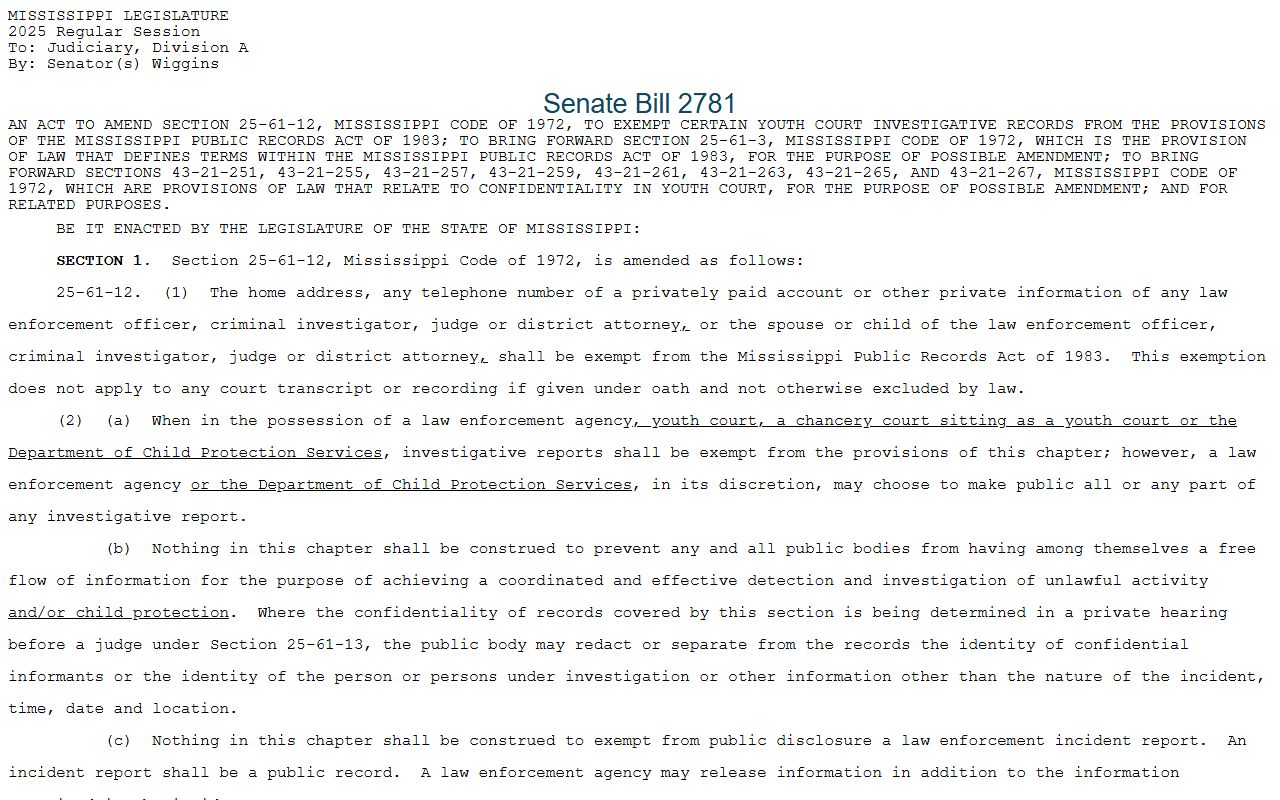
That kind of statute keeps youth-court files and other protected records out of the ordinary public index, which matters when a guardianship or commitment touches a minor or a vulnerable adult. Public probate records also redact sensitive personal data. Social Security numbers, financial account numbers, and the names of minors in protected cases are often removed before a file is released. When a record appears sealed or missing, the office that controls it can explain whether a confidentiality rule applies.